-
Can’t Afford School Uniform? Help & Support

What help is available if I can’t afford school uniform? School uniform can be a big expense, particularly when your child has grown out of several things at once, is changing schools or needs new shoes too. If you can’t afford school uniform, start by speaking to your child’s school. Help with school uniform costs…
-
Behind the MoneyPlus People: 5 stars for Wayne

Behind the MoneyPlus People: 5 stars for Wayne Last month, Wayne supported a customer who had been struggling to manage their finances following a decline in their mental health. Wayne is one of our debt advisors and he’s been working in the debt advice industry for seven years – the past two years being at…
-
Balancing work stress and financial pressure

Balancing work stress and financial pressure Money worries can affect more than your bank balance. They can change how you sleep, how you focus, how you react to pressure and how much energy you have left for work. Financial stress at work happens when money worries affect your focus, mood, decisions or ability to cope…
-
I feel like I’m failing at life because of money

I feel like I’m failing at life because of money Debt, missed payments or a lack of savings can feel deeply personal. They can start to look like evidence that life has not gone the way it should have. You may look at your bank balance, rent, bills, or the things you haven’t managed to…
-
Why not being able to afford everything doesn’t make you a bad parent

Why not being able to afford everything doesn’t make you a bad parent If you feel like a bad parent because you can’t afford things, it doesn’t mean you’re failing your children. It may mean your money is stretched. Your income might not go as far as it used to. Debt repayments may be taking…
-
My Partner Doesn’t Know I’m in Debt. What Should I Do?

My partner doesn’t know I’m in debt. What should I do? Being in debt without your partner knowing can feel frightening. You might be worried they’ll be angry, disappointed, or that it could change how they see you. Debt can feel even harder when you’re carrying it alone. You may be hiding letters, avoiding conversations,…
-
Skipping Meals to Pay Bills? What To Do Next

Skipping meals to pay bills: what to do if you can’t afford food and bills Skipping meals so you can pay bills is a sign that your budget is under serious pressure. It doesn’t mean you’ve failed. It means the cost of essentials may now be more than your income can cover. Recent research from…
-
How to talk to kids about money

How to talk to kids about money Talking to children about money can feel uncomfortable, especially if money feels tight in your own household. You might worry they’re too young or feel unsure what to say. You don’t need to be an expert to talk to kids about money in a helpful way. The most…
-
Why do I compare myself to others financially?

It’s hard not to compare your finances to other people’s. It can sometimes feel like everyone else is doing better with money — saving more, spending more comfortably, or moving ahead faster.
-
Managing family finances on a tight budget

Managing family finances on a tight budget Managing family finances on a tight budget can feel hard, especially when food, energy, rent, mortgage payments and childcare costs are taking up more of your income. Recent data from the Money and Pensions Service shows that 49% of UK adults are struggling to keep up, falling behind,…
-
Behind the MoneyPlus People: A thank you card for Paula
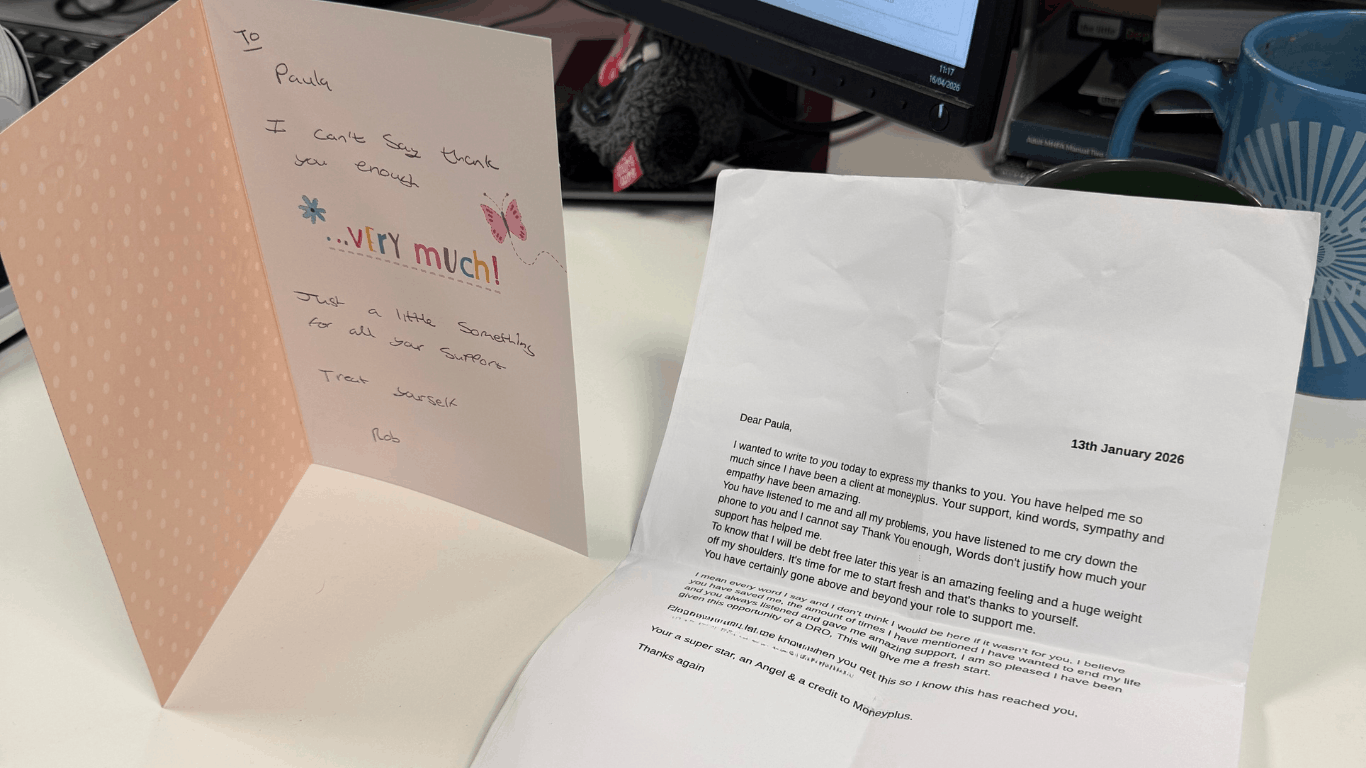
Behind the MoneyPlus People: A thank you card for Paula Welcome to our new blog series – Behind the MoneyPlus People. This series will be a place for us to share the incredible work our MoneyPlus people do every day, and to celebrate how these wins are positively impacting our customers. Last week, one of…
-
Debt consolidation vs Debt Management Plan (DMP) | key differences explained

Debt consolidation vs debt management plan: what’s the difference? Debt consolidation and Debt Management Plans (DMPs) are two ways to manage multiple debts. With debt consolidation, you take out new credit, such as a loan or credit card, to pay off existing debts. Debt consolidation is more commonly used by people who can still access…

MoneyPlus Advice
Helping people struggling with debt


close
MoneyPlus Advice Articles
You are here:
- Home
- MoneyPlus Advice Articles